








Search

Please enter a keyword or what you are looking for in the field below to search.

alt
Search result
There is no result for your search, please check again.
    alt alt alt alt
    alt alt alt alt
    alt

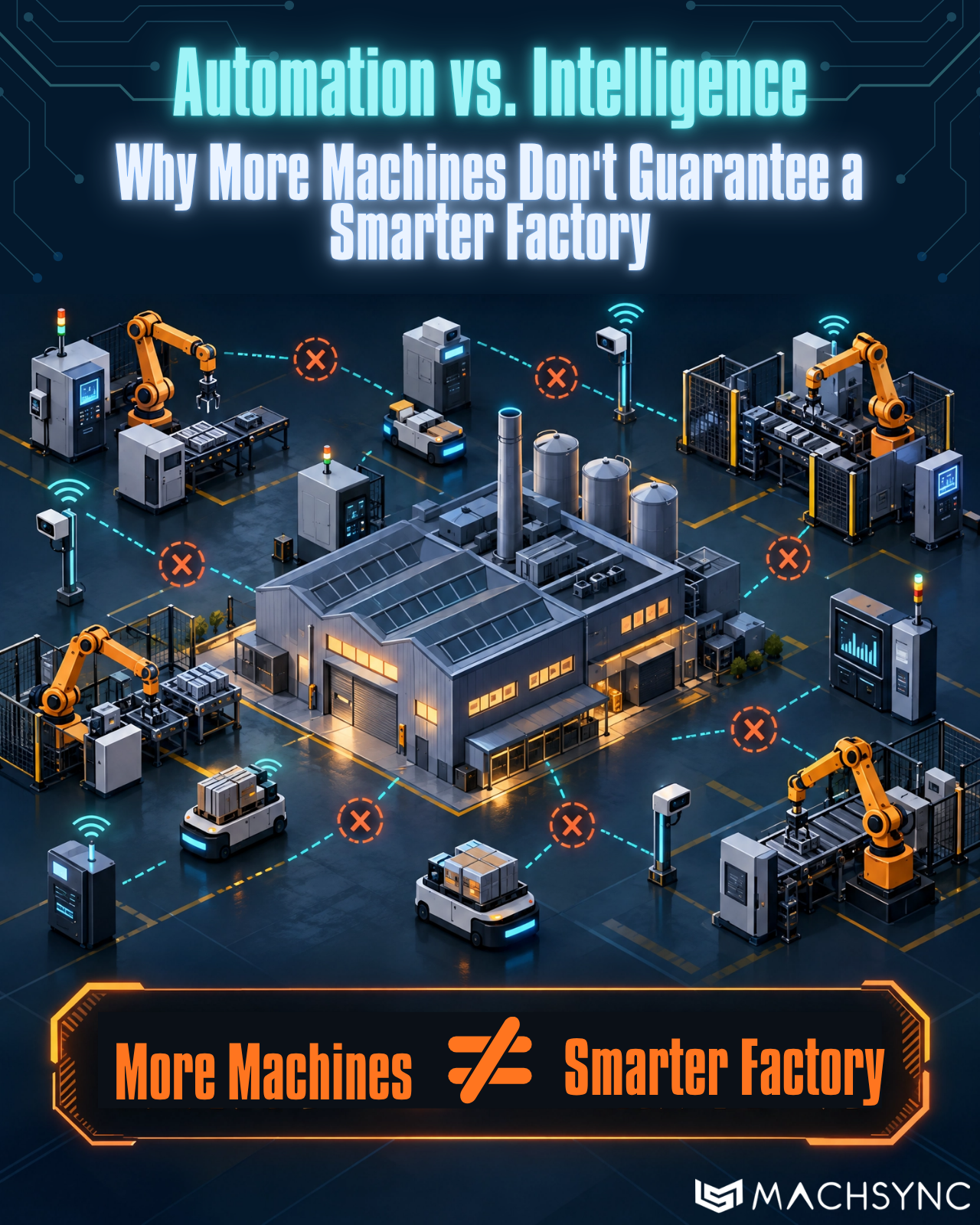
    Automation vs. Intelligence: Why More Machines Don't Guarantee a Smarter Factory

    Automation is the foundation of smart manufacturing, but it is not the destination. Buying more equipment does not make a factory smarter. Only when data can flow, be integrated, and be turned into a basis for decisions does an investment in automation deliver real value, rather than becoming yet another form of idle waste on the production line.

    Scroll

    A Common Misconception

    Many factory managers evaluating smart-manufacturing investments carry a yardstick in their heads: how many robotic arms have been installed, how many routes the automated guided vehicles run, how many points the sensors cover. The longer the equipment list, the "smarter" the factory seems to be.


    But walk into many factories that have been adopting automation for years and you'll see a paradox. Plenty of equipment has been bought, yet the production line hasn't really gotten smarter. Machines run on their own, data sits in separate systems, and changeovers still depend on veteran workers' experience to call a stop or a go. Money has been spent and efficiency hasn't kept pace. There is even a pile of assets that need servicing and maintenance and often sit idle.


    This isn't automation's fault. It's a case of confusing "automation" with "intelligence."
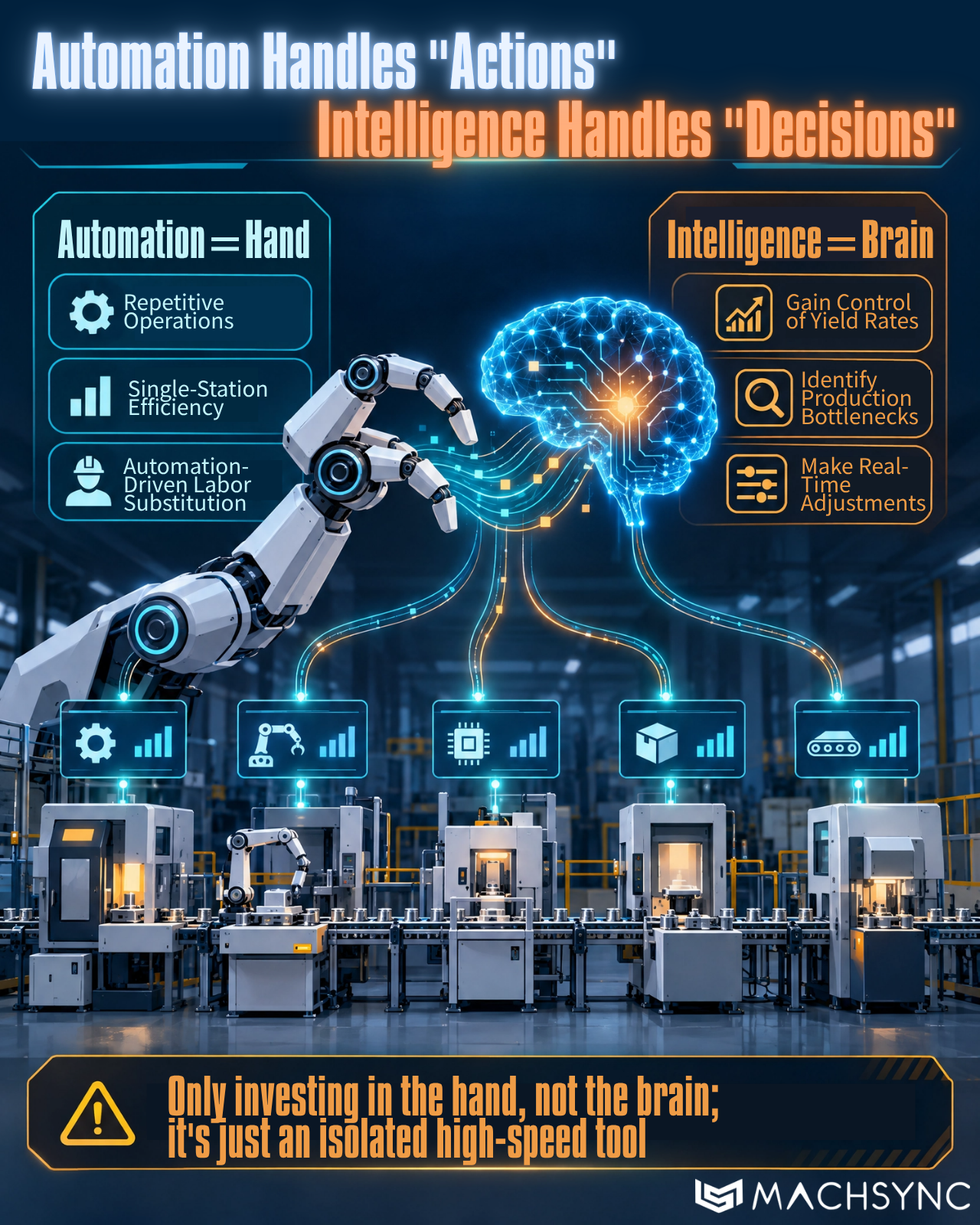
    Automation Handles "Actions"; Intelligence Handles "Decisions"

    Automation solves the "hand" problem: having machines take over repetitive human motions and raising the efficiency of a given workstation. There is nothing wrong with that, and it is often the first step in upgrading many industries.


    But the real value of a smart factory lies not in how fast any single station runs. It lies in whether the entire production line, the whole factory, "knows what it is doing": whether it can grasp yield, bottlenecks, and equipment status in real time and adjust accordingly. That is a problem for the "brain."


    No matter how fast a machine is, if the data it generates isn't collected, organized, and connected to other stations, it is just an isolated high-speed tool, not part of a smart factory. This is exactly why so many factories "bought the equipment but didn't get smarter": they invested in the hand, not the brain.

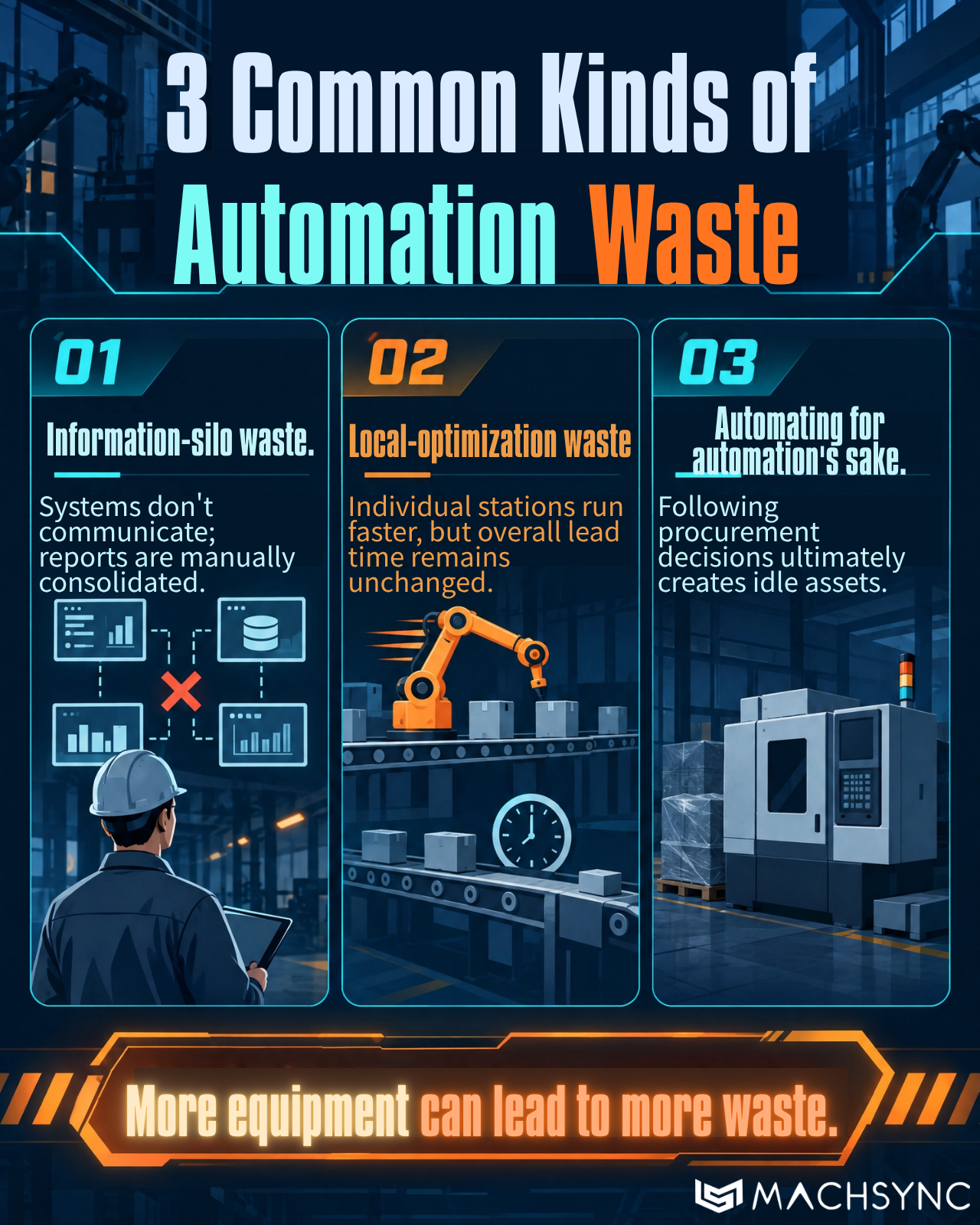
    Three Common Kinds of "Automation Waste"

    1. Information-silo waste.
      Each machine has its own control system and its own data format, and they don't talk to each other. When a manager wants to see overall equipment utilization, reports from different systems have to be stitched together by hand, and by the time that's done the numbers are already out of date. The more equipment, the more silos, and the higher the cost of stitching.

    2. Local-optimization waste.
      Resources are concentrated on optimizing one workstation to the extreme without checking whether it is actually the bottleneck. The result is that upstream output rises while downstream piles up more semi-finished goods. Overall delivery time doesn't improve, and work-in-process inventory actually grows.

    3. Automating for automation's sake.
      Seeing competitors adopt a piece of equipment, a company buys it too, without first checking whether its own process characteristics, workforce structure, and changeover frequency actually suit it. Once the equipment arrives, it turns out to be insufficiently flexible or its maintenance costs exceed expectations, and it ends up as a decoration on the production line.


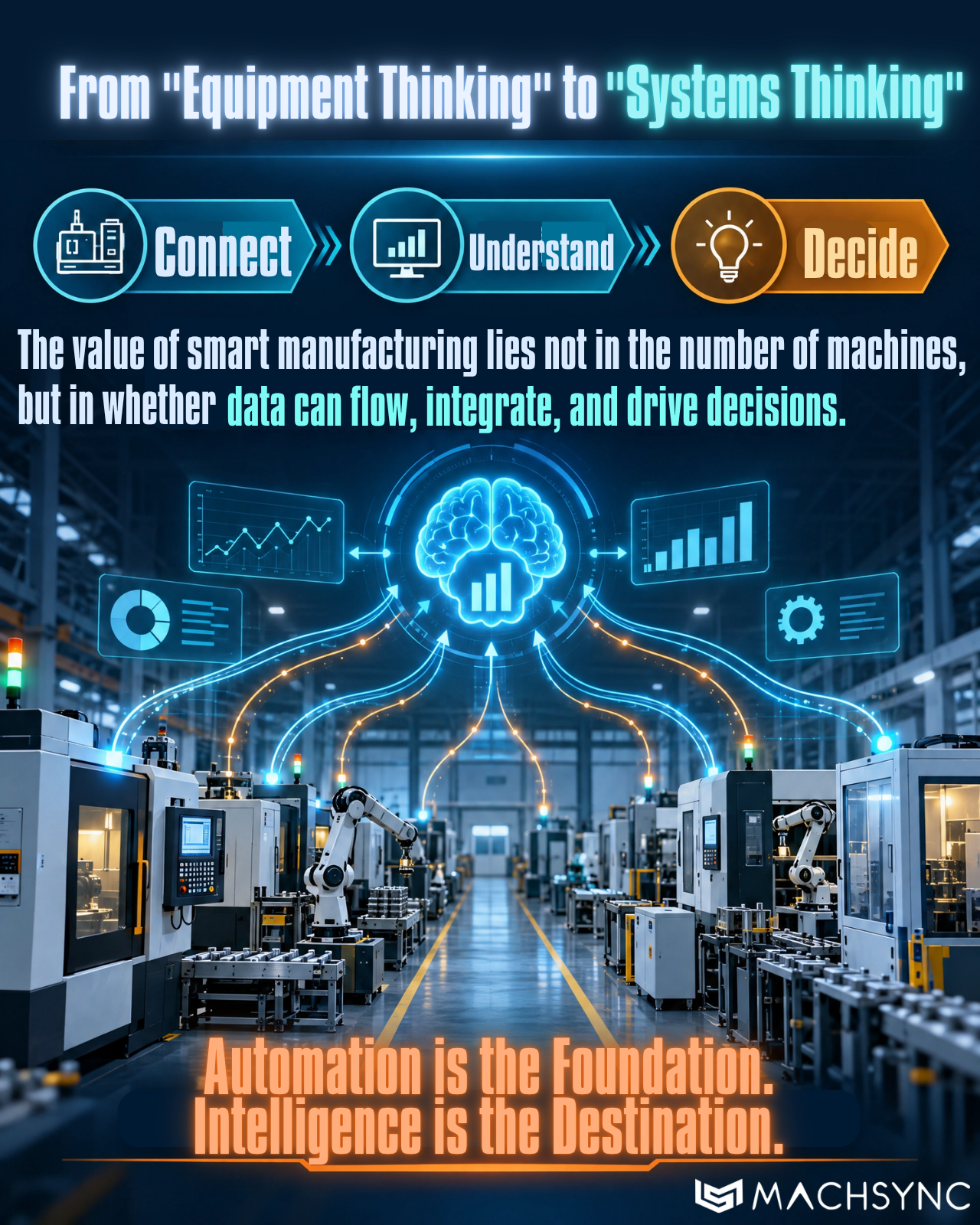
    From "Equipment Thinking" to "Systems Thinking"

    A truly smart factory isn't a race over the number of machines; it's a race in system-integration capability. The same equipment, paired with a system architecture that can connect data, analyze it in real time, and support decisions, can produce several times the value of standalone operation.

    The Real Question: Does Your Data Flow?

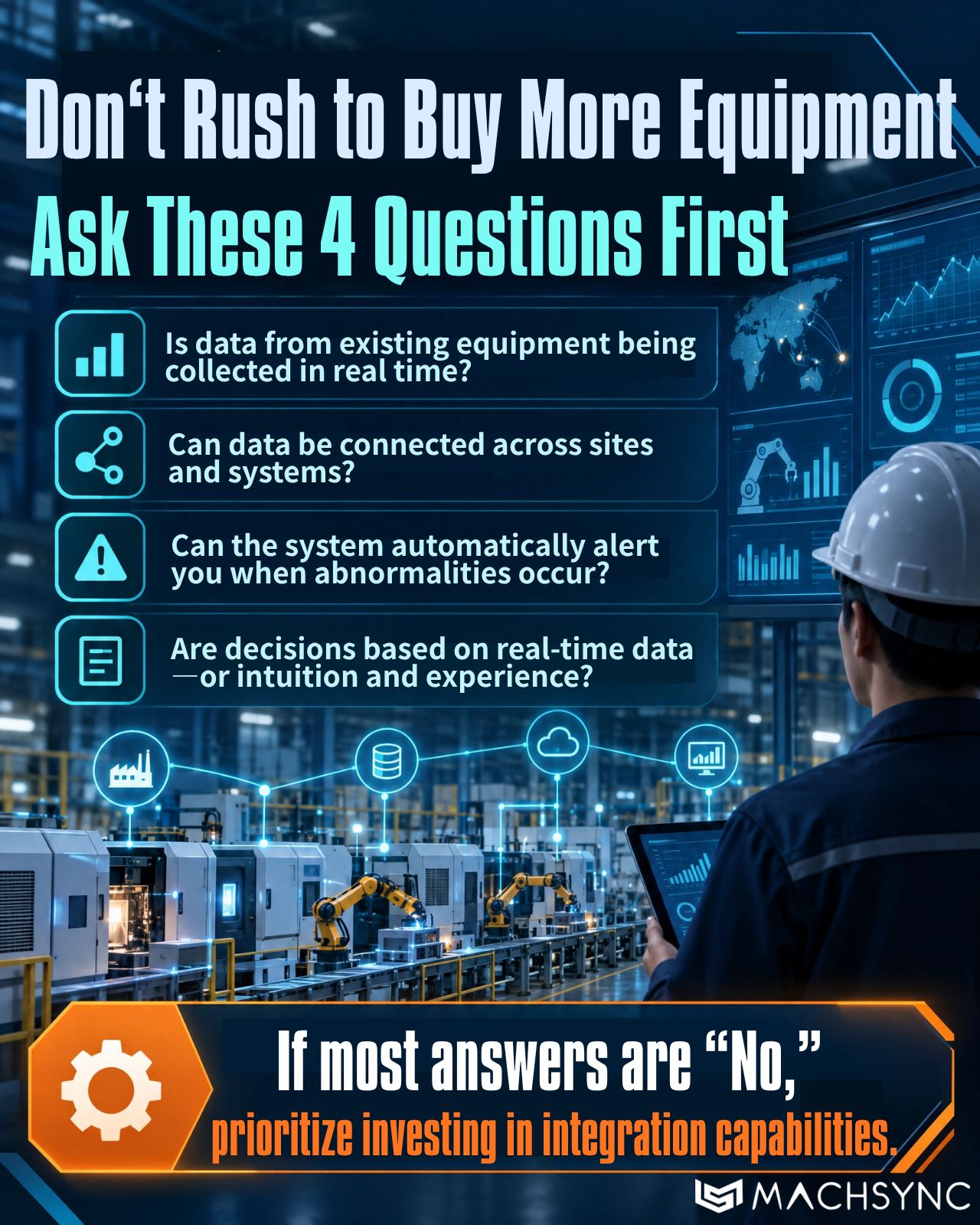
    Rather than "Should we buy another machine?", the question factory managers would do better to ask themselves first is:

    • Is the data generated by existing equipment being collected in real time?

    • Can this data be connected and compared across stations and across systems?

    • When an anomaly occurs, can the system proactively raise an alert, or do you have to wait for someone on patrol to notice?

    • Are decisions based on real-time data, or on experience and gut feeling?

    If the answers to most of these questions are no, then rather than buying another new machine, the higher-priority investment is the ability to "connect" existing equipment and "put data to use." That is exactly the problem that smart-manufacturing platforms, system integration, and production-line visualization set out to solve.

    This is also why, when evaluating smart-manufacturing investments, we recommend first taking stock of whether "the data from existing assets is being put to good use," and only then deciding whether the next investment should go to equipment or to integra

    Sources: Public domain references

    Some visual content on this page was created or edited with the assistance of generative AI.

    This article is original content created by Machsync. It may not be used for commercial purposes or distributed, shared, or sold in any form. Unauthorized reproduction, excerpting, copying, or use in any visual format is strictly prohibited. 

    For reprint or licensing inquiries, please contact Machsync.

    ﹌﹌﹌﹌﹌﹌﹌﹌﹌﹌﹌﹌﹌﹌﹌

    📬 Get in Touch with Machsync

    📍 2F., No. 38, Keya Rd., Daya Dist. Taichung City, Taiwan

    📞 +886-4-2473-6883

    ✉️ admin@machsync.ai